Your Patients Trust You With More Than Their Health — Don't Let a Data Breach Break That Trust

Imagine this: your agency gets a call on a Monday morning from a caregiver saying their phone was stolen over the weekend. On that phone? Patient schedules, addresses, medication notes, and contact information — all stored in an unsecured app. Within hours, you're not just dealing with a lost device. You're staring down a potential HIPAA violation, a breach notification requirement, and the very real possibility of losing the trust you've spent years building with your clients and their families.
This isn't a rare horror story. It's happening to home care agencies across the country right now. According to the U.S. Department of Health and Human Services, healthcare data breaches affected over 133 million records in 2023 alone — and small to mid-sized providers are increasingly in the crosshairs. Cybercriminals know that smaller agencies often lack the IT infrastructure of large health systems, making them easier targets.
The good news? You don't need a Fortune 500 IT department to protect your agency. With the right policies, tools, and habits in place, you can dramatically reduce your risk and demonstrate to clients, families, and referral partners that data security is something you take seriously. Here's how.
Why Home Care Agencies Are a Prime Target for Data Breaches
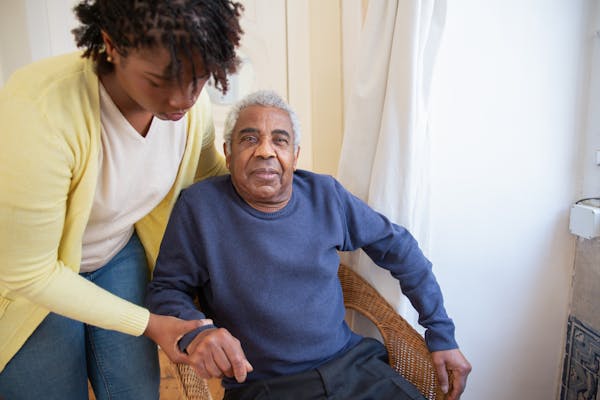
Home care is uniquely vulnerable compared to other healthcare settings. Unlike a hospital with a centralized IT team and a secured network, your agency operates across dozens — sometimes hundreds — of locations simultaneously. Caregivers are logging in from personal smartphones, home Wi-Fi networks, and coffee shop hotspots. Paper documentation still circulates in some agencies. And staff turnover, which runs notoriously high in home care, creates constant risk of unauthorized access from former employees.
The types of data your agency handles are also particularly sensitive:
- Protected Health Information (PHI) including diagnoses, medications, and care plans
- Social Security numbers and insurance information
- Home addresses and daily schedules of vulnerable individuals
- Financial and billing information
- Emergency contacts and family relationships
In the wrong hands, this information can fuel identity theft, financial fraud, or even physical harm to your clients. The stakes couldn't be higher.
Understanding Your HIPAA Obligations

Before diving into specific practices, it's worth grounding everything in HIPAA — the Health Insurance Portability and Accountability Act. As a home care agency, you are almost certainly a covered entity under HIPAA, which means you are legally required to protect the privacy and security of patient health information.
HIPAA's Security Rule requires covered entities to implement three types of safeguards:
- Administrative Safeguards — Policies, training, and procedures that govern how staff handle PHI
- Physical Safeguards — Controls over physical access to systems and data (e.g., locking filing cabinets, securing devices)
- Technical Safeguards — Technology-based protections like encryption, access controls, and audit logs
Violations can result in fines ranging from $100 to $50,000 per violation, with annual caps up to $1.9 million per violation category. Beyond fines, a breach can trigger mandatory federal audits, reputational damage, and civil lawsuits from affected patients. The cost of doing nothing far outweighs the cost of doing it right.
Home Care Data Security Best Practices: A Practical Guide
1. Conduct a Regular Security Risk Assessment
HIPAA actually requires this — yet many small agencies skip it entirely. A security risk assessment (SRA) helps you identify where your vulnerabilities are before a breach finds them for you. You should conduct an SRA at least annually and after any significant change to your operations (like adopting new software or onboarding a large number of new staff).
The Office for Civil Rights (OCR) offers a free Security Risk Assessment Tool specifically designed for small and medium healthcare providers. There's no reason not to use it.
2. Control Who Has Access to Patient Data
Not everyone in your agency needs access to everything. A billing specialist doesn't need to read clinical care notes. A caregiver doesn't need access to other clients' records. Implementing role-based access control (RBAC) ensures that each staff member can only see the information necessary to do their job.
Key practices include:
- Assigning unique login credentials to every employee — never share passwords
- Revoking access immediately when an employee leaves your agency
- Requiring strong passwords (at least 12 characters with a mix of letters, numbers, and symbols)
- Enabling multi-factor authentication (MFA) on all systems that support it
- Auditing access logs regularly to flag unusual activity
3. Secure Mobile Devices Used in the Field
This is arguably the biggest vulnerability for home care agencies. Caregivers using personal phones or tablets in the field are a significant risk point. At a minimum, your agency should have a formal Mobile Device Management (MDM) policy that includes:
- Requiring screen locks and PINs on all devices used for work
- Enabling remote wipe capabilities in case a device is lost or stolen
- Prohibiting the download of patient data to personal devices or unsecured apps
- Requiring caregivers to use approved, encrypted apps for all client communication
Modern home care software platforms are designed with mobile security in mind — using encrypted connections and controlled access so that even if a device is compromised, patient data stays protected at the platform level.
4. Train Your Staff — Regularly and Seriously
The majority of healthcare data breaches involve human error. Phishing emails, weak passwords, accidental disclosures, and improperly disposed documents are all preventable with good training. Yet many agencies treat HIPAA training as a once-a-year checkbox exercise.
Effective security training should:
- Be conducted at hire and at least annually thereafter
- Cover how to recognize phishing emails and social engineering scams
- Include real-world scenarios relevant to home care settings
- Explain the personal consequences of a breach (for both the patient and the employee)
- Be documented with signed acknowledgments for your compliance records
"Security is not a technology problem. It's a people problem. The best firewall in the world won't protect you if a caregiver clicks a fake email link." — A commonly cited truth in cybersecurity, and one every home care owner should internalize.
5. Use HIPAA-Compliant Software and Vendors
Every software platform or service provider that touches your patient data is required to sign a Business Associate Agreement (BAA) with your agency. This is a HIPAA requirement. If a vendor won't sign a BAA, that's a serious red flag — and using them puts your agency at legal risk.
When evaluating software for your agency, ask vendors directly about:
- Data encryption (both in transit and at rest)
- Their breach notification procedures
- SOC 2 or similar security certifications
- Role-based access controls within the platform
- Audit trail and logging capabilities
Platforms like BridgeCare OS are built with HIPAA compliance at the foundation — including encrypted data storage, role-based permissions, and a secure family portal that lets families stay informed without exposing unnecessary information to third parties. Choosing software that takes security seriously is one of the most impactful decisions you can make for your agency's risk posture.
6. Have a Breach Response Plan Ready Before You Need It
Even with the best precautions, breaches can still happen. How you respond in the first 72 hours can make or break your agency's recovery. HIPAA requires that you notify affected individuals within 60 days of discovering a breach, and notify the Secretary of HHS. Breaches affecting 500 or more individuals in a single state also require media notification.
Your breach response plan should include:
- A designated Privacy Officer responsible for leading the response
- A step-by-step checklist for containing and assessing the breach
- Template notification letters for patients and HHS
- Contact information for your legal counsel and cyber insurance provider
- A communication plan for staff, clients, and referral partners
If you don't have this plan documented today, creating it should be at the top of your to-do list.
7. Back Up Your Data — and Protect Those Backups Too
Ransomware attacks — where hackers encrypt your data and demand payment to restore it — are increasingly targeting healthcare providers. The single best defense against ransomware is a reliable, tested data backup system. Follow the 3-2-1 rule: keep three copies of your data, on two different types of media, with one stored offsite (or in a secure cloud environment).
Also ensure that your backups themselves are encrypted and access-controlled. A backup sitting on an unsecured external hard drive is almost as risky as no backup at all.
Building a Culture of Security in Your Agency
Individual practices matter, but they're most effective when they're supported by a broader organizational culture that takes security seriously. This starts at the top. When agency owners and administrators visibly prioritize data security — talking about it in staff meetings, investing in the right tools, and holding people accountable — it sends a clear message that this isn't optional.
Consider appointing a dedicated Privacy or Security Officer within your agency, even if that's a part-time role for a senior administrator. This person owns the compliance calendar, coordinates training, manages vendor agreements, and leads any breach response efforts. Having clear ownership makes all the difference.
Protecting Patient Data Is Protecting Your Business
Home care is built on relationships — the relationship between caregiver and client, between your agency and families, between your business and your referral partners. A data breach doesn't just expose information; it fractures those relationships. And in a word-of-mouth industry like home care, your reputation is everything.
The investment required to protect patient data is modest compared to the potential cost of a breach — financially, legally, and reputationally. The steps outlined above aren't just compliance checkboxes. They're foundational to running a home care agency that families can trust and that can continue growing with confidence.
If you're evaluating whether your current technology is actually helping or hurting your security posture, it may be time for a closer look. BridgeCare OS offers a 14-day free trial with no setup fees and no contracts — so you can explore what a purpose-built, security-first home care platform looks like without any commitment. Your patients deserve that peace of mind. So does your business.
Keep Reading
Protecting Patient Data: Security Best Practices for Home Care Agencies
Learn how to protect patient data at your home care agency with proven security best practices, HIPAA compliance tips, and affordable tools.
Protecting Patient Data: Security Best Practices for Home Care Agencies
Learn how to protect patient data in your home care agency with proven security practices, HIPAA compliance tips, and affordable tools.
Protecting Patient Data: Security Best Practices for Home Care Agencies
Learn essential home care data security practices to protect patient data, stay HIPAA compliant, and avoid costly breaches. A must-read for agency owners.
Keep Reading
Protecting Patient Data: Security Best Practices for Home Care Agencies
Learn how to protect patient data at your home care agency with proven security best practices, HIPAA compliance tips, and affordable tools.
Protecting Patient Data: Security Best Practices for Home Care Agencies
Learn how to protect patient data in your home care agency with proven security practices, HIPAA compliance tips, and affordable tools.
Protecting Patient Data: Security Best Practices for Home Care Agencies
Learn essential home care data security practices to protect patient data, stay HIPAA compliant, and avoid costly breaches. A must-read for agency owners.
Ready to modernize your home care agency?
BridgeCare OS unites scheduling, EVV, billing, and family transparency on one platform. Start your 14-day free trial — no credit card required.
Start Free Trial →